
Class Diagram
In a Nutshell
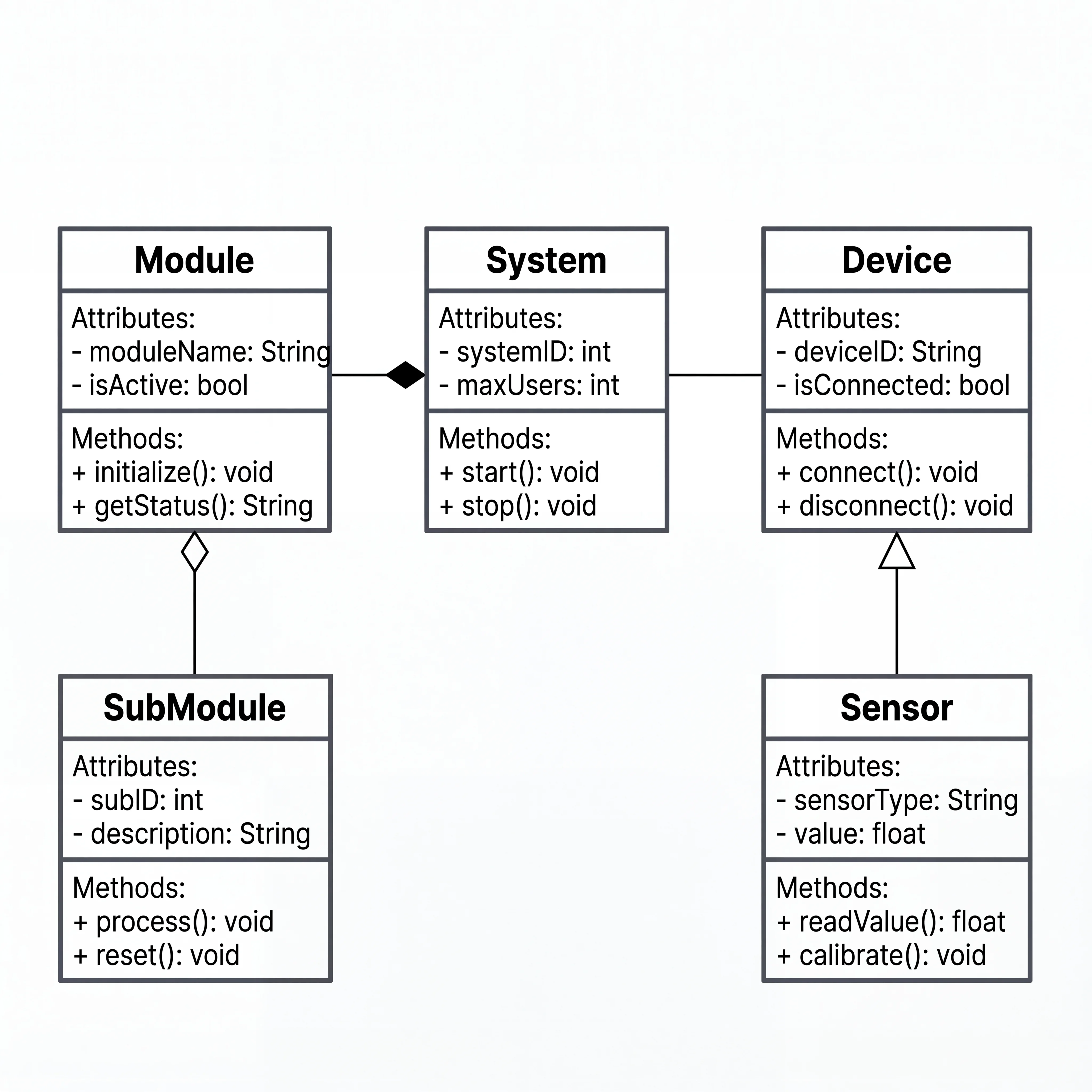
A class diagram shows the entities in your system, their attributes, their methods, and how they relate to each other. It's the backbone of Low Level Design — the diagram where you demonstrate object-oriented thinking, SOLID principles, and design patterns. While an architecture diagram shows services and infrastructure, a class diagram zooms inside one service and shows how the code is structured. If the interviewer asks you to "design the classes for X," this is the diagram they want.
How It Actually Works
Anatomy of a Class Box
┌────────────────────────┐
│     <<interface>>       │  ← stereotype (optional)
│      ClassName          │  ← name
├────────────────────────┤
│ - privateAttr: Type     │  ← attributes
│ + publicAttr: Type      │     - = private
│ # protectedAttr: Type   │     + = public
├────────────────────────┤     # = protected
│ + methodName(): RetType │  ← methods
│ - helperMethod(): void  │
└────────────────────────┘
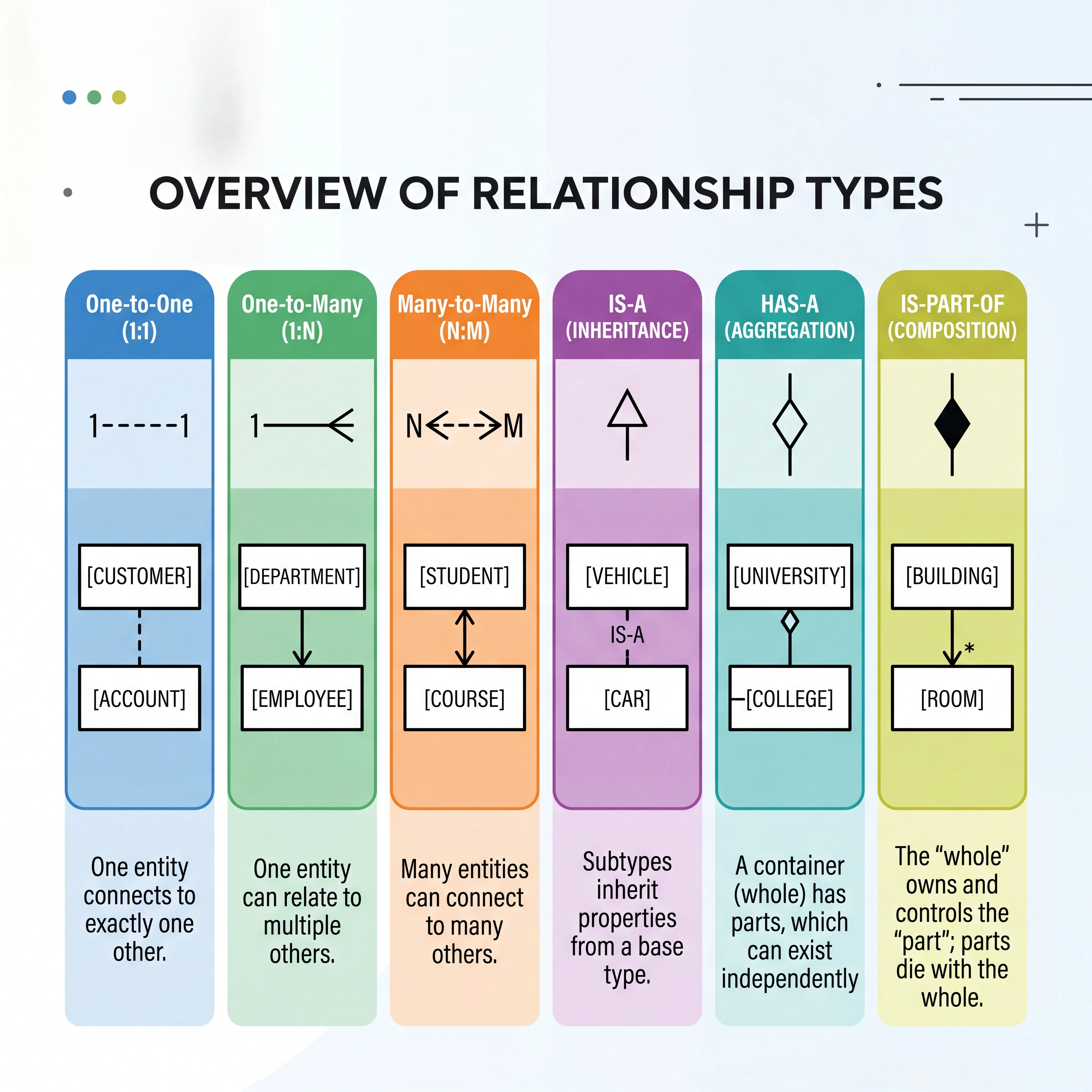
Relationship Types
| Relationship | Symbol | Meaning | Example |
|---|---|---|---|
| Association | Solid line | "uses" or "knows about" | Order ── Customer |
| Aggregation | Open diamond ◇─ | "has a" (weak ownership — child can exist alone) | Team ◇── Player |
| Composition | Filled diamond ◆─ | "owns" (strong ownership — child can't exist without parent) | Order ◆── OrderItem |
| Inheritance | Triangle △─ | "is a" (child extends parent) | Dog △── Animal |
| Implementation | Dashed triangle △- - | "implements" (class realizes interface) | EmailSender △- - NotificationSender |
| Dependency | Dashed arrow ⟶ | "uses temporarily" (method parameter, local variable) | OrderService ⟶ PaymentGateway |
Multiplicity
Written at each end of a relationship line:
| Notation | Meaning |
|---|---|
1 |
Exactly one |
0..1 |
Zero or one (optional) |
* or 0..* |
Zero or more |
1..* |
One or more |
3..5 |
Three to five |
When to Use Class Diagrams
- LLD interviews — When asked to design the internal structure of a service
- Design pattern application — Showing how Strategy, Observer, Factory, or Decorator patterns are used
- API/SDK design — Defining the public interface of a library
- Domain modeling — Before writing code, to align on entities and their relationships
When NOT to Use Class Diagrams
- In HLD — use architecture diagrams instead
- For data persistence — use ER diagrams (they map to tables; class diagrams map to code)
- For behavior/flow — use sequence or state diagrams
Seeing It in Action
Scenario: Class diagram for a library management system
┌───────────────────────┐       ┌────────────────────────┐
│       Library          │       │    <<interface>>        │
├───────────────────────┤       │    SearchStrategy       │
│ - name: String         │       ├────────────────────────┤
│ - books: List<Book>    │       │ + search(query): Book[]│
├───────────────────────┤       └────────△───────────────┘
│ + addBook(book): void  │               │ implements
│ + searchBooks(): Book[]│       ┌───────┴──────┐
│ + registerMember(): ID │       │              │
└───────────┬───────────┘  ┌────┴─────┐  ┌────┴──────┐
            │ 1         *  │TitleSearch│  │ISBNSearch  │
            ◆              ├──────────┤  ├───────────┤
┌───────────┴───────────┐  │+search() │  │+search()  │
│        Book            │  └──────────┘  └───────────┘
├───────────────────────┤
│ - isbn: String         │
│ - title: String        │          ┌────────────────────┐
│ - author: Author       │          │      Member         │
│ - status: BookStatus   │          ├────────────────────┤
├───────────────────────┤          │ - memberId: String  │
│ + borrow(): boolean    │          │ - name: String      │
│ + return(): void       │          │ - borrowedBooks: [] │
│ + isAvailable(): bool  │          ├────────────────────┤
└───────────────────────┘          │ + borrowBook(): bool│
            △                       │ + returnBook(): void│
            │ extends                └────────────────────┘
  ┌─────────┴─────────┐                      │
  │                    │               borrows │ 0..*
┌─┴──────────┐  ┌─────┴──────┐               │
│ PhysicalBook│  │  EBook      │               ▼
├────────────┤  ├────────────┤         ┌──────────────┐
│ - shelf: Str│  │ - fileUrl   │         │  BorrowRecord │
│ - condition │  │ - format    │         ├──────────────┤
├────────────┤  ├────────────┤         │ - borrowDate  │
│ +getShelf() │  │+download() │         │ - dueDate     │
└────────────┘  └────────────┘         │ - returnDate? │
                                        └──────────────┘
Design decisions visible:
- Composition (◆): Library owns Books — a book doesn't exist outside a library context
- Inheritance (△): PhysicalBook and EBook extend Book — shared attributes, different behavior
- Strategy pattern: SearchStrategy interface with pluggable implementations (TitleSearch, ISBNSearch)
- Multiplicity: One Library has many (*) Books. One Member has zero or more BorrowRecords.
Interview Questions
Q: What's the difference between aggregation and composition? Give an example of each. Hint: Composition:
Order ◆── OrderItem— if the order is deleted, its items are deleted too (strong ownership). Aggregation:Department ◇── Employee— if the department is dissolved, employees still exist (weak ownership). The distinction matters for cascade deletes and lifecycle management.Q: Design a class diagram for a parking lot system. Hint: Classes:
ParkingLot(composition withParkingFloor),ParkingFloor(composition withParkingSpot),ParkingSpot(hasSpotTypeenum: COMPACT, REGULAR, LARGE),Vehicle(inheritance: Car, Truck, Motorcycle),Ticket,Payment. Use Strategy for pricing (hourly, daily, flat rate).Q: How do class diagrams relate to database ER diagrams? Hint: Classes map roughly to tables, attributes to columns, and relationships to foreign keys. But class diagrams include behavior (methods), inheritance (which doesn't map cleanly to relational tables), and in-memory relationships. ER diagrams are purely about persistent data structure.
Q: When would you use an interface vs an abstract class in your class diagram? Hint: Interface: when you want to define a contract that multiple unrelated classes can implement (a
Searchableinterface for books, members, and transactions). Abstract class: when you want to share code between related classes (Vehiclewith sharedlicensePlateattribute andpark()method, extended byCarandTruck).Q: Your class diagram has a class with 15 methods and 10 attributes. What's wrong, and how do you refactor? Hint: It violates Single Responsibility Principle — it's doing too many things. Break it into smaller classes by responsibility. Use composition: extract groups of related attributes and methods into separate classes (e.g., extract address fields into an
Addressclass, payment logic into aPaymentProcessorclass).
References
- UML Class Diagram — Visual Paradigm — comprehensive notation guide
- Head First Design Patterns by Freeman & Robson — design patterns illustrated with class diagrams
- Clean Code by Robert C. Martin — principles for well-structured classes
Dive Deeper
- Refactoring Guru — UML Class Diagrams — visual guide with interactive examples
- Domain-Driven Design by Eric Evans — designing rich domain models with class diagrams
- PlantUML Class Diagram — draw class diagrams as code for version control